Introduction
Weight loss injections have become an important option in modern obesity treatment. Medicines such as semaglutide, tirzepatide and liraglutide can help eligible patients manage appetite, food intake and metabolic health.
However, like any prescription medicine, weight loss injections can cause side effects.
The most commonly reported problems with GLP-1-based therapies are gastrointestinal symptoms, particularly nausea, vomiting, diarrhoea, constipation and abdominal discomfort. These effects are often more noticeable when treatment is started or the dose is increased.
Understanding potential side effects before starting treatment can help patients recognise what may be expected, what requires medical attention and why treatment should be monitored by a healthcare professional.
What Are Weight Loss Injections?
Weight loss injections are prescription medicines used as part of medical weight management.
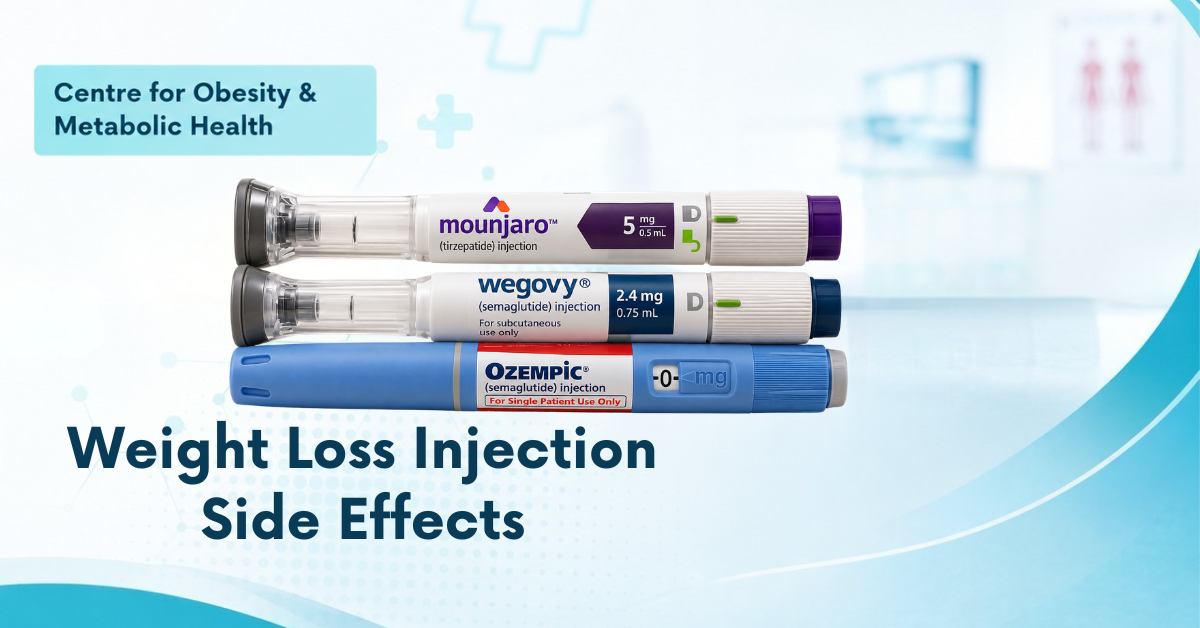
Commonly discussed medicines include:
| Medicine | Active Ingredient | Main Pathway |
|---|---|---|
| Wegovy | Semaglutide | GLP-1 |
| Ozempic | Semaglutide | GLP-1 |
| Mounjaro | Tirzepatide | GIP + GLP-1 |
| Saxenda | Liraglutide | GLP-1 |
The exact indication differs between medicines and countries.
These medications can help:
- Reduce appetite
- Increase feelings of fullness
- Reduce food intake
- Improve glucose regulation
- Support weight reduction
WHO's current obesity guidance includes liraglutide, semaglutide and tirzepatide among GLP-1-based therapies that may be used for adults with obesity as part of comprehensive care.
Why Do Weight Loss Injections Cause Side Effects?
GLP-1-based medicines affect several processes involved in appetite and digestion.
They can:
- Slow stomach emptying
- Influence appetite signals in the brain
- Change food intake
- Affect gastrointestinal activity
As the body adjusts to treatment, some patients experience temporary digestive symptoms.
The WHO evidence review found that gastrointestinal adverse events are the main adverse effects associated with GLP-1 therapies used for obesity.
Common Weight Loss Injection Side Effects
1. Nausea
Nausea is one of the most commonly reported side effects.
It may occur when:
- Treatment is first started
- The dose is increased
- Large or heavy meals are consumed
For many patients, nausea becomes less noticeable as the body adapts to treatment.
Persistent or severe nausea should be discussed with your doctor.
2. Vomiting
Some patients may experience vomiting, particularly during the early stages of treatment or after dose escalation.
Repeated vomiting can cause:
- Dehydration
- Electrolyte imbalance
- Difficulty maintaining adequate nutrition
Contact your healthcare professional if vomiting is persistent or severe.
3. Constipation
Constipation can occur because of changes in gastrointestinal function and reduced food intake.
Patients may benefit from discussing:
- Fluid intake
- Fibre intake
- Physical activity
- Appropriate treatment options
with their doctor.
4. Diarrhoea
Diarrhoea is another commonly reported gastrointestinal side effect.
If diarrhoea is severe or continues for an extended period, medical advice is important because dehydration can occur.
5. Abdominal Discomfort
Some patients may experience:
- Bloating
- Abdominal pain
- Indigestion
- Stomach discomfort
Persistent or severe abdominal pain should not be ignored.
6. Reduced Appetite
Reduced appetite is an intended effect of many weight management medicines, but excessive appetite suppression can become a concern if a patient is unable to consume adequate nutrition.
A medical weight-management program should focus on healthy weight reduction rather than simply eating as little as possible.
Are Weight Loss Injection Side Effects Temporary?
For many patients, gastrointestinal symptoms are more noticeable during treatment initiation or dose escalation and may improve as the body adapts.
However, not every side effect should simply be "waited out."
Speak with your doctor if symptoms are:
- Severe
- Persistent
- Getting worse
- Preventing adequate food or fluid intake
- Affecting daily activities
Your doctor may need to review the dose, treatment schedule or medication.
What Side Effects Require Urgent Medical Attention?
Most side effects are not emergencies, but certain symptoms require prompt medical evaluation.
Seek medical advice urgently for symptoms such as:
Severe or Persistent Abdominal Pain
Especially if the pain is severe, persistent or associated with vomiting.
Persistent Vomiting
Repeated vomiting can lead to dehydration and other complications.
Signs of Severe Dehydration
These may include:
- Very little urine
- Severe dizziness
- Extreme weakness
- Confusion
Symptoms of a Serious Allergic Reaction
Such as:
- Difficulty breathing
- Swelling of the face, lips or throat
- Severe rash
Do not ignore severe or rapidly worsening symptoms.
Can Weight Loss Injections Affect the Gallbladder?
Gallbladder-related problems have been reported with GLP-1 therapies.
Rapid weight loss itself can also increase the risk of gallstones.
Possible symptoms of a gallbladder problem can include:
- Pain in the upper abdomen
- Nausea
- Vomiting
- Fever
- Yellowing of the skin or eyes
These symptoms require medical evaluation.
WHO's evidence review identifies gallbladder-related disorders among adverse outcomes that require consideration with GLP-1 therapies.
Can Weight Loss Injections Cause Pancreatitis?
Pancreatitis is an uncommon but potentially serious condition that has been evaluated in relation to GLP-1 medicines.
Severe, persistent abdominal pain—particularly when associated with vomiting—should be medically assessed.
Patients with a previous history of pancreatitis should tell their doctor before starting treatment.
Can Weight Loss Injections Affect the Kidneys?
Kidney problems may occur indirectly, particularly when significant vomiting or diarrhoea causes dehydration.
This is why maintaining adequate fluid intake and reporting significant gastrointestinal symptoms is important.
WHO's expert review notes that kidney function assessment may be considered when initiating or adjusting GLP-1 receptor agonists.
Patients with existing kidney disease should discuss their condition with their doctor before treatment.
Do Weight Loss Injections Cause Low Blood Sugar?
GLP-1-based medicines generally have a relatively low risk of hypoglycaemia when used alone.
However, the risk can increase when certain diabetes medicines, particularly insulin or sulfonylureas, are used at the same time.
Patients with diabetes should tell their doctor about all medicines they are taking before starting treatment.
Can Weight Loss Injections Cause Hair Loss?
Some patients may notice hair shedding during significant weight loss.
This may be associated with the weight-loss process itself rather than necessarily being a direct toxic effect of the medication.
Rapid changes in body weight, reduced calorie intake and nutritional deficiencies can contribute to temporary hair shedding.
If hair loss is significant or persistent, discuss it with your doctor rather than stopping treatment on your own.
Do Weight Loss Injections Cause str "Ozempic Face"?
The term "Ozempic face" is commonly used online to describe facial changes after substantial weight loss.
Loss of facial fat can make:
- Cheeks appear less full
- Skin appear looser
- Facial lines more noticeable
This is generally related to overall weight loss rather than a unique facial side effect of Ozempic.
The amount of facial change varies from person to person.
Side Effects of Ozempic, Wegovy, Mounjaro and Saxenda
Although these medicines belong to related treatment categories, their active ingredients and indications differ.
Ozempic
Contains semaglutide.
Commonly reported adverse effects include gastrointestinal symptoms such as nausea, vomiting, diarrhoea and constipation.
Wegovy
Also contains semaglutide and is used for chronic weight management in eligible patients.
Gastrointestinal symptoms are among the most common adverse effects.
Mounjaro
Contains tirzepatide, which acts on both GIP and GLP-1 pathways.
Digestive side effects such as nausea, diarrhoea, vomiting and constipation can occur.
Saxenda
Contains liraglutide, a GLP-1 receptor agonist used for weight management.
Gastrointestinal symptoms are also common.
The exact side-effect profile, contraindications and warnings depend on the specific medicine.
Does Increasing the Dose Increase Side Effects?
Side effects can become more noticeable when the dose is increased.
For this reason, doctors generally use gradual dose escalation rather than starting treatment at a high dose.
The purpose is to:
- Allow the body to adapt
- Improve treatment tolerance
- Reduce gastrointestinal symptoms
- Identify the dose that is appropriate for the patient
Patients should never increase or decrease their dose without medical advice.
How Can You Reduce Weight Loss Injection Side Effects?
Your doctor may recommend practical measures depending on your symptoms.
These can include:
Eat Smaller Meals
Large meals may worsen nausea or stomach discomfort.
Eat Slowly
Taking more time to eat can help with fullness and digestive comfort.
Maintain Hydration
Adequate fluid intake is particularly important if vomiting or diarrhoea occurs.
Prioritise Nutrition
Even when appetite decreases, adequate protein, fibre, vitamins and minerals remain important.
Follow the Prescribed Dose Schedule
Do not increase the dose faster than recommended.
Report Persistent Symptoms
Your doctor can determine whether the dose or treatment needs to be adjusted.
Who Should Be More Carefully Evaluated Before Starting?
Additional medical assessment may be needed for people with:
- Previous pancreatitis
- Significant gastrointestinal disorders
- Kidney disease
- Gallbladder disease
- Diabetes treated with insulin or sulfonylureas
- Certain thyroid conditions
- Multiple medications
- Pregnancy or plans for pregnancy
The exact precautions vary according to the medicine.
Should You Stop Weight Loss Injections If You Have Side Effects?
Do not stop or change the dose on your own.
Mild gastrointestinal symptoms may occur during treatment, but persistent or severe symptoms require medical review.
Your doctor may decide to:
- Continue the current dose
- Delay dose escalation
- Adjust the dose
- Provide supportive treatment
- Change the medication
- Stop treatment when medically necessary
The correct decision depends on your symptoms and overall health.
Why Medical Monitoring Matters
Weight loss injections should be part of a structured obesity-management plan.
Regular follow-up allows doctors to monitor:
- Weight loss
- Appetite
- Nutritional intake
- Side effects
- Blood glucose
- Blood pressure
- Kidney function when appropriate
- Overall treatment response
WHO recommends GLP-1 treatment as part of comprehensive obesity care that includes healthy diet, physical activity and professional support.
Avoid Unverified Weight Loss Injections
The popularity of GLP-1 medicines has also increased the availability of falsified and substandard products.
WHO has reported falsified semaglutide products and advises patients to obtain medicines through licensed healthcare professionals and authorised pharmacies.
Avoid purchasing injectable medicines from:
- Unverified websites
- Unauthorised sellers
- Social media accounts
- Unknown sources offering unusually low prices
A prescription from a qualified doctor and purchase through an authorised pharmacy can help reduce these risks.
Frequently Asked Questions
Conclusion
Weight loss injections can be an effective component of obesity treatment for appropriately selected patients, but understanding their side effects is essential before starting therapy.
Nausea, vomiting, constipation, diarrhoea and abdominal discomfort are among the most common side effects of GLP-1-based medicines. Most can be managed with appropriate treatment and monitoring, but severe or persistent symptoms should never be ignored.
If you are considering GLP-1 weight loss injections in Navi Mumbai, consult an obesity specialist before starting treatment. A personalised medical assessment can help determine whether the treatment is appropriate and how it should be monitored.