Introduction
When people want to lose weight quickly, crash diets can seem attractive. Cutting calories dramatically, skipping meals or following restrictive diet plans may produce a noticeable change on the weighing scale within a short period.
But rapid weight loss is not necessarily the same as healthy or sustainable weight loss.
Obesity is a complex, chronic condition influenced by nutrition, physical activity, sleep, genetics, medications, metabolic health and other factors. The World Health Organization recommends comprehensive, person-centred obesity care that can include nutritional counselling, behavioural interventions, physical activity, medication and, when appropriate, metabolic or bariatric surgery.
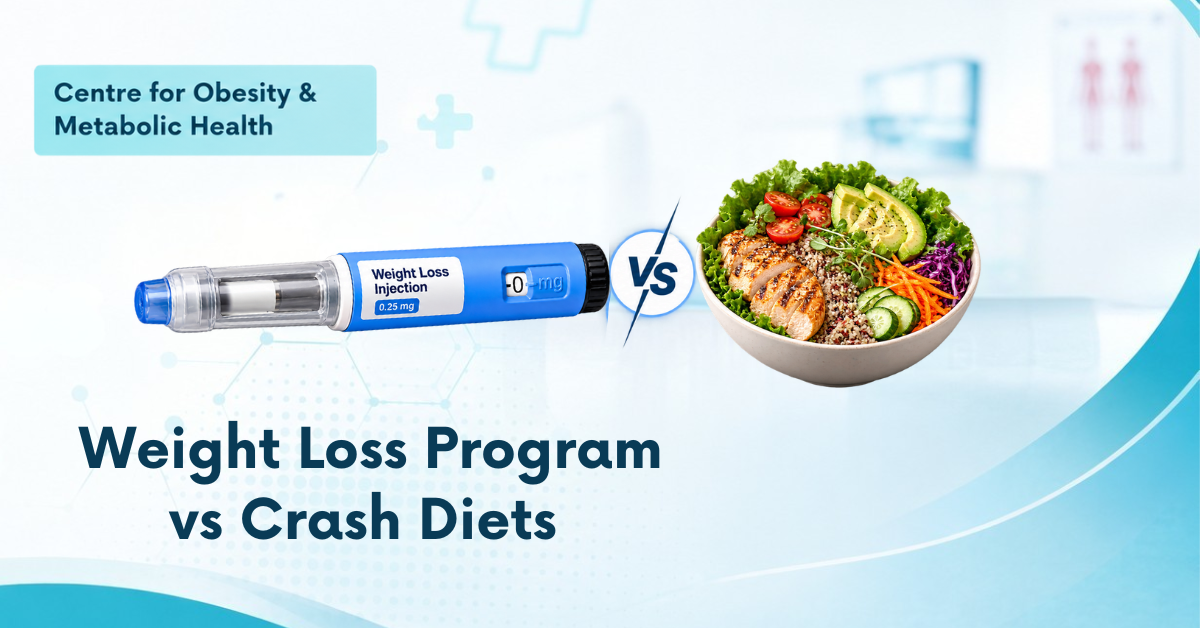
A medical weight loss program takes a different approach from a crash diet. Instead of focusing only on how quickly the number on the scale decreases, it considers why weight gain occurred, what health risks are present and how weight can be managed over the long term.
If you are considering weight loss treatment in Navi Mumbai, understanding this difference can help you choose a more sustainable approach.
What Is a Crash Diet?
A crash diet generally refers to a highly restrictive eating plan designed to produce rapid weight loss over a short period.
Examples may include:
- Extremely low-calorie diets
- Meal skipping
- Juice-only diets
- Single-food diets
- Severe carbohydrate restriction
- Prolonged fasting without medical supervision
- Unsupervised meal-replacement plans

The common feature is usually rapid restriction rather than a long-term treatment strategy.
However, it is important to distinguish ordinary "fad" crash diets from medically supervised low-energy or very-low-energy diets.
NICE guidance states that low-energy diets of 800–1,200 calories and very-low-energy diets below 800 calories may have a role in selected patients, but they should be part of a multicomponent obesity-management strategy with clinical support. Very-low-energy diets should not be used as a long-term strategy.
What Is a Medical Weight Loss Program?
A medical weight loss program is a structured approach to managing overweight or obesity under healthcare supervision.
Instead of prescribing the same diet to everyone, the program can consider:
- Current weight
- BMI
- Waist circumference
- Medical history
- Blood sugar
- Blood pressure
- Medications
- Eating patterns
- Physical activity
- Sleep
- Previous weight-loss attempts
- Weight-related health conditions

Treatment may involve a combination of:
- Nutrition counselling
- Physical activity
- Behavioural support
- Medical treatment
- Weight loss medications when appropriate
- Regular monitoring
Modern obesity guidelines emphasise multicomponent and individualised care rather than a one-size-fits-all approach.
Medical Weight Loss vs Crash Diets: What's the Difference?
The table below highlights key distinctions between doctor-supervised medical weight management and conventional crash diets:
| Feature / Aspect | Medical Weight Loss Program | Crash Diet |
|---|---|---|
| Approach | Individualised | Usually one-size-fits-all |
| Supervision | Doctor-supervised | Often self-directed |
| Health Evaluation | Considers medical conditions | May overlook medical history |
| Primary Focus | Focuses on long-term weight management | Usually focuses on rapid weight loss |
| Medication Options | May include medication when appropriate | Usually relies mainly on food restriction |
| Follow-Up Care | Monitors progress and health markers | Often has limited follow-up |
| Metabolic Support | Considers nutrition and metabolic health | May focus primarily on calories |
| Long-term Strategy | Includes strategies for weight maintenance | Often ends when target weight is reached |
Why Does a Crash Diet Often Produce Fast Weight Loss?
When calorie intake is suddenly reduced, the body uses stored energy.
Early changes on the weighing scale may also reflect changes in:
- Body water
- Glycogen stores
- Food volume in the digestive system
Therefore, a large drop in weight during the first few days or weeks does not necessarily mean that the same amount of body fat has been lost.
This is one reason why the number on the scale alone does not tell the complete story.
What Happens When You Stop a Crash Diet?
One of the major challenges with highly restrictive diets is returning to normal eating patterns.
After a restrictive diet ends, some people may experience:
- Increased hunger
- Difficulty maintaining the diet
- Return to previous eating habits
- Weight regain
- Repeated cycles of losing and regaining weight (weight cycling)
NICE specifically recommends discussing the possibility of weight regain and weight cycling with patients undergoing restrictive low-energy diets and emphasises the importance of long-term weight-maintenance support.
Weight regain is not simply a matter of willpower. Obesity involves complex biological and behavioural mechanisms, which is why long-term management is important.
Why Doctor-Supervised Weight Loss Is Different
1. It Starts With an Assessment
A doctor does not simply ask, "How much weight do you want to lose?"
The first question is:
“Why are you gaining or struggling to lose weight?”
Assessment may include:
- Weight history
- BMI and waist circumference
- Diet and eating routines
- Physical activity and mobility
- Sleep patterns and stress levels
- Underlying medical conditions
- Current medications
- Metabolic risk factors
This helps create a treatment strategy suited to the individual.
2. It Considers Medical Conditions
Weight management can become more complicated when a person also has:
- Type 2 diabetes
- High blood pressure
- Insulin resistance
- Sleep apnea
- Dyslipidaemia
- Fatty liver disease
- Polycystic ovary syndrome (PCOS)
- Other obesity-related conditions
A medical program can take these factors into account rather than treating weight in isolation.
3. Nutrition Is Personalised
A crash diet may tell you: "Stop eating these foods."
A medical program asks: "What eating pattern can you realistically follow while meeting your nutritional needs?"
A personalised nutrition plan may consider:
- Adequate protein intake
- Dietary fibre
- Portion sizes
- Meal timing
- Cultural food preferences
- Work schedule
- Family eating patterns
- Existing medical conditions
NICE recommends flexible and individualised dietary approaches that take food preferences, personal circumstances and comorbidities into account.
4. Medication Can Be Considered When Appropriate
For some patients, lifestyle changes alone may not provide adequate weight reduction.
Depending on the clinical situation, a doctor may consider anti-obesity medication, including certain GLP-1-based or related therapies.
These medicines can influence:
- Appetite
- Fullness
- Food intake
- Blood glucose regulation
WHO's current guidance recognises GLP-1 therapies as a potential long-term treatment option for adults living with obesity, while emphasising that they should be combined with healthy eating, physical activity and professional support.
Medication is not automatically prescribed to every patient; it requires careful clinical assessment.
5. Progress Is Monitored
A crash diet may end once you reach a target number on the scale.
Medical weight management continues to evaluate whether the treatment is actually working. Follow-up may monitor:
- Weight changes and body composition
- Waist circumference
- Appetite and satiety levels
- Nutrition quality and hydration
- Physical activity tolerance
- Blood pressure
- Blood glucose and HbA1c
- Medication response and tolerability
- Side effects management
This makes it possible to adjust the treatment plan when necessary.
NICE recommends monitoring weight and personal goals throughout weight-management interventions and providing ongoing support.
6. The Goal Is More Than Weight Loss
A successful medical weight-loss program may aim to improve:
- Blood sugar control
- Blood pressure
- Physical fitness and mobility
- Sleep quality
- Overall metabolic health
- Quality of life and long-term vitality
Even relatively modest weight loss can have significant health benefits.
The goal should therefore not be: "Lose as much weight as possible, as quickly as possible."
Instead: "Achieve meaningful weight loss while improving overall health and maintaining the results."
Are Very-Low-Calorie Diets Always Bad?
No.
This distinction is important.
A medically supervised very-low-energy diet can have a role in specific circumstances. NICE recommends considering such diets only within a specialist multicomponent weight-management service for people with obesity who have a clinically assessed need to lose weight rapidly. They should be nutritionally complete, limited in duration and accompanied by clinical support.
The problem is unsupervised extreme restriction.
A person should not independently adopt an extremely low-calorie diet simply because it promises faster weight loss.
What Are the Risks of Unsupervised Crash Dieting?
Highly restrictive diets can make it difficult to obtain adequate:
- Protein
- Fibre
- Vitamins
- Minerals
- Essential fatty acids and nutrients
NICE notes potential concerns with very-low-energy diets including constipation, fatigue, hair loss, weight cycling and weight regain, while also emphasising their restrictive nature.
People taking medicines for other health conditions may also require medication review when their calorie intake changes significantly.
Can Weight Loss Injections Be Part of Medical Weight Management?
Yes, when medically appropriate.
Weight loss injections are not a shortcut or replacement for healthy lifestyle changes.
GLP-1 therapies can be incorporated into a comprehensive obesity-treatment plan for eligible patients.
WHO specifically states that GLP-1 therapies should not replace healthy diet and physical activity.
A doctor may consider:
- Whether medication is appropriate
- Which medicine is suitable
- Starting dose
- Dose escalation schedule
- Treatment response
- Side effects management
- Long-term maintenance strategy
Medical Weight Loss vs Crash Diets: Which Is More Sustainable?
The biggest difference is the time horizon.
Crash Diet Timeline
Short-term restriction → Rapid weight change → Diet ends → High risk of regain
Medical Weight Management Timeline
Clinical Assessment → Personalised plan → Multi-component treatment → Ongoing monitoring → Continuous adjustment → Long-term maintenance
This does not mean that every medical weight-loss program produces permanent weight loss or that every restrictive diet fails.
Rather, doctor-supervised treatment provides a structured framework for addressing obesity as a long-term health condition.
How Long Does a Medical Weight Loss Program Last?
There is no universal duration.
Treatment length depends on:
- Starting BMI
- Weight-related conditions
- Treatment response
- Weight-loss goals
- Medication use
- Lifestyle changes
- Long-term maintenance needs
WHO describes GLP-1 therapies as generally long-term treatments and emphasises the importance of ongoing obesity care.
The focus should be on maintaining health improvements rather than reaching a particular weight by a fixed deadline.
What Does a Doctor-Supervised Weight Loss Program Include?
A comprehensive program may include:
Medical Assessment
Understanding your weight history, metabolic risks, and overall health status.
Nutrition Planning
Developing an enjoyable, culturally compatible, and sustainable eating pattern.
Physical Activity
Creating an activity plan appropriate for your fitness level, joint health, and medical conditions.
Behavioural Support
Addressing emotional eating behaviours, sleep routines, stress triggers, and environmental barriers.
Medication When Appropriate
Considering evidence-based anti-obesity medication when clinically indicated.
Regular Follow-Up
Tracking progress, managing side effects, and modifying the plan when needed.
Who May Benefit From a Medical Weight Loss Program?
A medical weight-management program may be appropriate for people who:
- Have obesity (BMI ≥ 30 kg/m² or Asian-specific criteria ≥ 27.5 kg/m²)
- Have overweight with weight-related health conditions
- Have repeatedly regained weight after dieting
- Have difficulty losing weight despite regular lifestyle changes
- Have metabolic risk factors like insulin resistance or prediabetes
- Need professional guidance for long-term weight management
A doctor can determine which treatment approach is appropriate after an initial evaluation.
Frequently Asked Questions
Conclusion
Crash diets may promise fast results, but fast weight loss is not the same as sustainable weight management.
A doctor-supervised medical weight loss program looks beyond calories and the weighing scale. It considers your medical history, metabolism, nutrition, lifestyle, weight-related health conditions and individual treatment goals.
For selected patients, treatment may also include prescription weight-loss medication such as GLP-1-based therapies alongside nutrition, physical activity and behavioural support. WHO emphasises that medication should form part of comprehensive obesity care rather than replace healthy lifestyle measures.
If you are looking for medical weight loss in Navi Mumbai, consult Dr. Mahesh Padsalge at Centre for Obesity & Metabolic Health for an individualised clinical assessment to determine which approach is most appropriate for your health and long-term goals.